Little Gecko® welding carriages · Engineering, QC & worldwide export from Beijing, China
Home / Guides / Tank & Vessel Welding

How to Automate Storage Tank and Vessel Welding

Most tank shops do not need a six-figure robotic cell. They need the right carriage on the right seam — shell long seams, vertical seams and circumferential seams are where the money is, and they are also the easiest to mechanise.

Start Here

Which seams on a tank actually pay to automate

Rank your welding hours by seam type. In most tank and vessel shops, the top three are the same: long longitudinal seams on shell plates, vertical seams where the welder is fighting gravity, and circumferential seams between courses. Those are the seams a carriage handles well — constant travel speed, constant torch angle, repeatable bead.
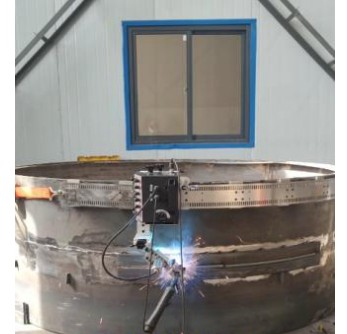
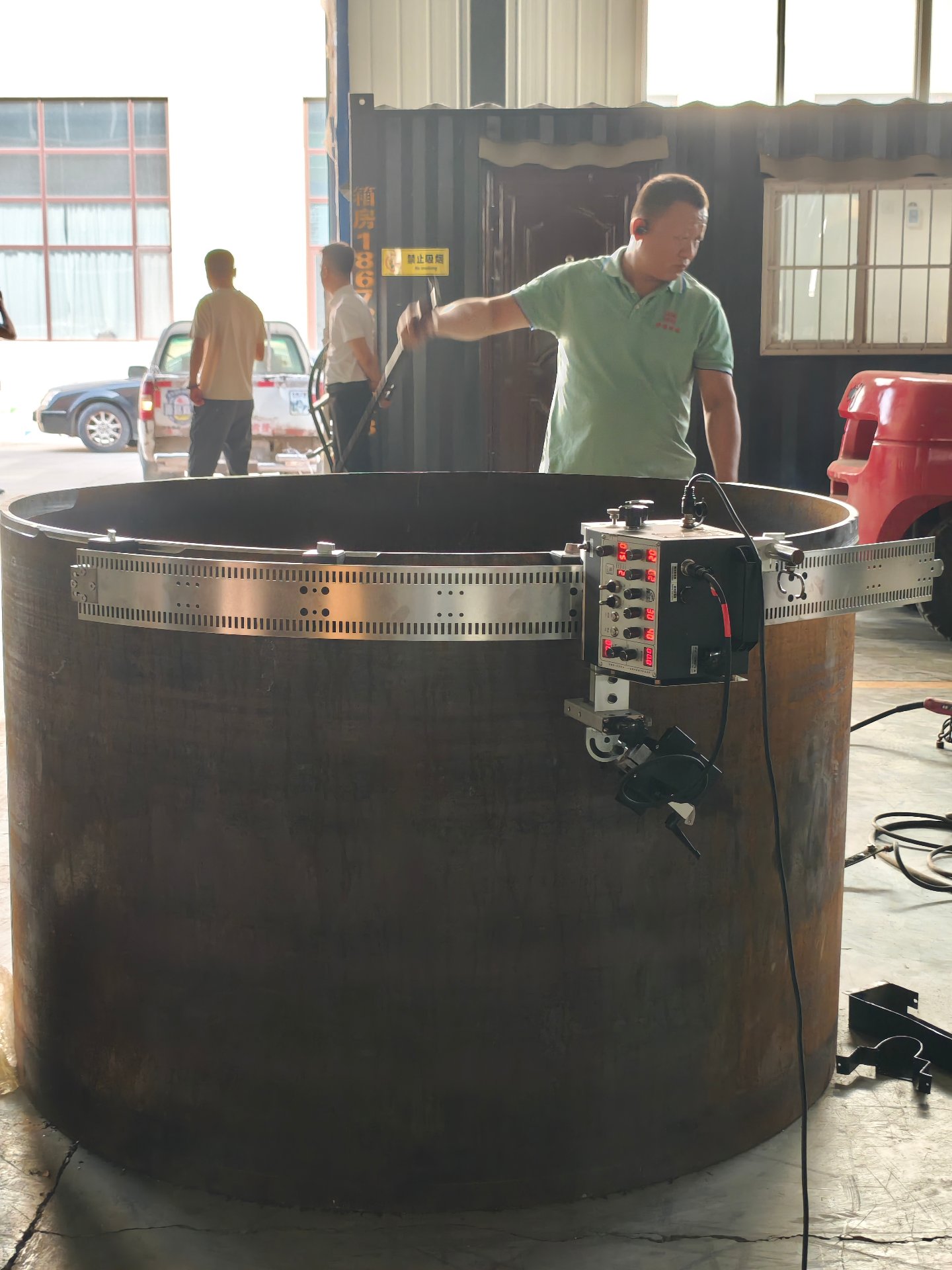
  • Shell long seams — straight or flexible track carriage, travel speed held constant over the full plate
  • Vertical seams — flexible track carriage held by magnetic adsorption, no scaffolding
  • Circumferential seams — flexible track around the course, or a magnetic crawler that walks the curve itself
  • Small nozzles, flanges and fittings — usually stay manual; automating them rarely pays
What we recommend: RG series flexible-track carriage for shell long seams and circumferential seams, ZG series straight-track carriage when the plate is flat and the seam is long, CX magnetic crawler when you want no track at all on large-diameter shells.
Storage Tank Welding Overview
Flexible track welding carriage on a storage tank shell Automatic circumferential seam welding on a large tank
Selection Table

Seam Type to Machine — Tank and Vessel Work

Tank / vessel seamRecommended machineWhy
Shell longitudinal (long) seam, flat positionZG series straight-track carriageRigid track follows the seam, no drift on long runs
Shell vertical seamRG series flexible-track carriageMagnetic adsorption holds the belt on the plate, no scaffold
Circumferential seam between coursesRG flexible track or CX magnetic crawlerTrack follows the circle, or the crawler walks it directly
Nozzle and fitting weldsManual or positioner (not cost-effective to automate)Short, irregular and constantly changing geometry
Tube-to-tubesheet joints (heat exchangers)HLGB25-108 tube-to-tubesheet machineHundreds of identical joints per tubesheet

Carbon steel from 3 mm plate is what the magnetic wheels need — coated or heavily scaled plate must be cleaned along the travel path.

Setup Plan

Four Steps From Manual Welding to a Carriage

STEP 01

Measure the Job

Seam type, plate thickness, tank diameter, weld length per tank, welding process (MIG/MAG/FCAW/SAW) and how many units per month.

STEP 02

Track or No Track

Track gives the straightest long seams; a magnetic crawler is fastest to position when there is no track to lay. Most tank shops end up with one of each.

STEP 03

Prepare the Steel

Bare, rust- and paint-free surface along the travel path, a stable power supply and a dry position for the control box. Nothing else changes in your process.

STEP 04

Test Weld, Then Train

Set oscillation width, dwell time and travel speed on a scrap plate, then hand the remote to the operator. Most welders are productive the same day.
Before You Ask for a Quote

Send us these six things and we can specify the machine in one reply

  • Weld type: longitudinal, circumferential, vertical, fillet or tube-to-tubesheet
  • Plate thickness and material (carbon steel, stainless, duplex…)
  • Tank / vessel diameter and seam length
  • Welding position and process (MIG/MAG/FCAW/SAW)
  • Power supply available on site (single or three phase)
  • Monthly output — this decides whether one carriage or two is the right answer
Why we ask: a carriage is specified by the seam, not by the catalogue. The same tank shop can need a ZG for flat plates and an RG for the shell — we would rather tell you that before the order than after.
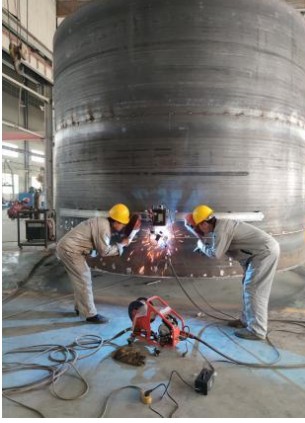
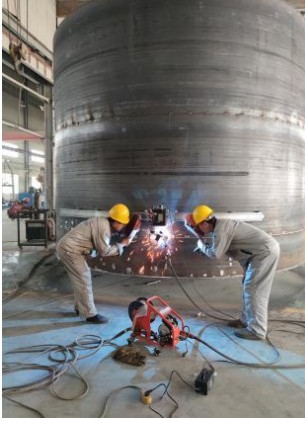
Storage tank shell welding in a fabrication workshop Welding carriages assembled and test welded on our own line
FAQ

Questions We Get Asked Before the First Quote

Do I have to change my welding process to automate tank seams?
No. The carriages carry your existing torch and wire feeder, so MIG/MAG, FCAW, TIG and SAW setups all keep working. You are mechanising the travel, not replacing the welding source.
How thick does the plate have to be?
For magnetic adsorption the plate should be at least 3 mm of magnetically permeable steel. Thicker is easier — there is more magnet force to work with. Stainless and aluminium need a different fixing method: track clamped or bolted to the workpiece.
Can one machine do both long seams and circumferential seams?
Yes, with the right track. The RG flexible track follows a flat plate for long seams and wraps around a shell for circumferential seams; the CX crawler does circumferential work with no track at all, and adds an optional track for long seams.
What sort of output increase can we expect?
It depends on seam length and how much time your welders currently lose repositioning, but the consistent gains are travel speed held constant all day, no position change for the operator and identical bead appearance between welders and shifts.
Keep Reading

Related Pages for Tank & Vessel Welding

Welding Tank Shells Every Day?

Send us your seam types, plate thickness and tank diameter — we will recommend the machine and quote within 24 hours.

Get a Quote