Little Gecko® welding carriages · Engineering, QC & worldwide export from Beijing, China
Home / Applications / Heavy Equipment

Heavy Equipment Welding — Thick Plate, Booms and Frames, Welded at Constant Speed

Heavy equipment means thick plate, long multi-pass seams, and parts far too big to turn over. A welding carriage holds the torch on line at a fixed travel speed, so penetration and bead shape stay the same from the first pass to the tenth.

Heavy Equipment Welding

Thick plate and long runs — the welder should not be the limiting factor

On excavator booms, crane sections, crusher frames and machine chassis the joint is usually a long butt or a heavy fillet on plate from 10 to 40 mm. Welding that by hand is a fight against fatigue: travel speed drifts through the shift, and on multi-pass work the effect multiplies pass after pass. A track-mounted carriage fixes the travel speed and keeps the oscillation settings on the panel between passes.
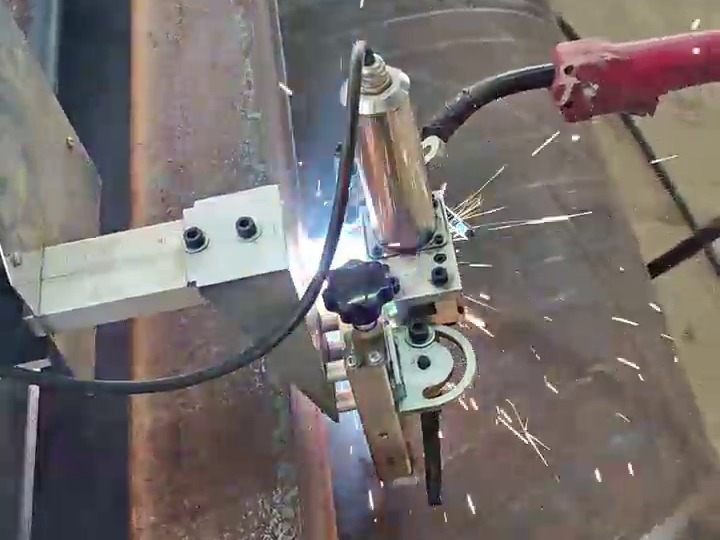
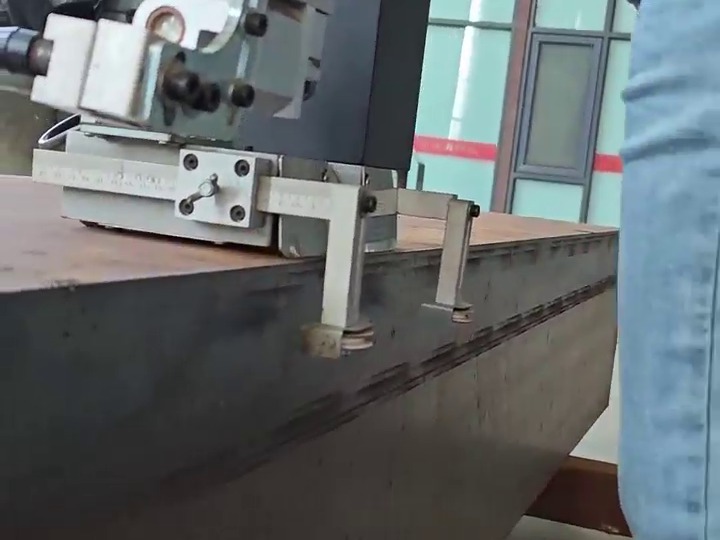
  • Long butt seams and multi-pass fills on plate 10–40 mm
  • Heavy fillet welds on frames, chassis, brackets and gussets
  • Twin-rail ZG configuration for wide plate and heavy sections
  • Circumferential seams on drums, rollers and cylinders with the CX crawler
  • Runs with your existing MIG/MAG power source, wire feeder and torch
What we recommend: ZG straight-track carriage (twin-rail for wide plate) for long straight seams and multi-pass filling; JJ / GJ fillet carriage for frame and chassis fillets, with the Q2 dual-torch version for both sides of a fabricated frame in one pass; CX magnetic crawler where a drum or cylinder has to be welded and no track can be laid.
The difference: A carriage does not make a heavy fabrication shop faster by magic. It makes the tenth pass identical to the first — which is what reduces rework, grinding and NDT failures on thick-section work.
Find the Right Carriage for Your Joint
Straight-track welding carriage welding a long seam on thick steel plate — real photo Fillet welding carriage welding a heavy fabricated frame — real photo
Seam Types We Cover

Which Carriage Welds What in Heavy Equipment

Typical joint / seamRecommended machine
Long straight butt seams on plate 10–40 mm (multi-pass)ZG-III-Q1Z-C on single rail
Wide plate and heavy sectionsZG with twin-rail track
Frame, chassis, bracket and gusset filletsJJ-III-Q1/J-W fillet carriage
Both fillets of a fabricated frame in one passJJ-Q2 dual-torch carriage
Circumferential seams on drums, rollers and cylindersCX-III-Q1Z-W magnetic crawler

Not sure which of these is your joint? Use the five-step selection guide or send a photo of the workpiece.

Watch It Work

Long Seam Welding on Thick Plate

Straight-track carriage welding a long seam on steel plate — real footage
Fillet carriage welding a heavy fabricated joint — real footage
FAQ

Heavy Equipment Welding — Common Questions

Can the carriage handle multi-pass welding on thick plate?
Yes — that is one of the main reasons heavy fabricators buy one. The carriage travels at a set speed from 0 to 1100 mm/min, so each pass is run at the same travel speed and the oscillation width is adjusted per pass. Because the speed is held by the machine rather than the operator, the fill sequence stays repeatable and the final cap is even.
Do we need a special track for thick plate?
For long straight seams we use the ZG precision rail, mounted with magnetic bases — no welding, no clamps to the plate, and it lifts off when the seam is done. Wide plate or heavy sections usually take the twin-rail configuration for extra stability. Fillet work on frames and chassis needs no track at all: the JJ / GJ carriage rides the workpiece.
Our parts are too big to move — does that matter?
That is exactly what the carriage is for. The machine comes to the workpiece: the track is laid on the part, the carriage is set on it and the weld is run in place. Nothing is turned over and nothing is repositioned, which is why this layout is common on chassis, booms and vessels welded in a fixed position.

Welding Thick Plate, Booms or Frames?

Send the plate thickness, seam length and annual volume — we will size the carriage and the track configuration, and quote within 24 hours.

Get a Quote